

Top Sellers
-
 SaleRegular price From $4.75 AUDRegular priceUnit price per
$4.95 AUDSale price From $4.75 AUDSale -
 SaleRegular price From $79.95 AUDRegular priceUnit price per
$95.95 AUDSale price From $79.95 AUDSale -
Regular price $64.95 AUDRegular priceUnit price per
$69.95 AUDSale price $64.95 AUDSale -
 Regular price $64.95 AUDRegular priceUnit price per
$89.95 AUDSale price $64.95 AUDSaleFree
Product! -
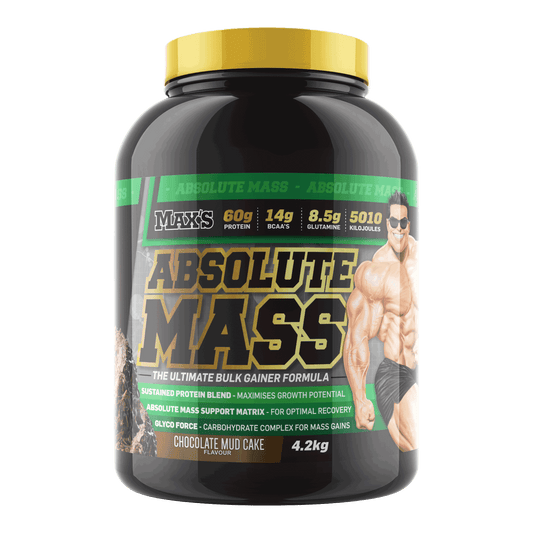 SaleRegular price From $84.95 AUDRegular priceUnit price per
$101.95 AUDSale price From $84.95 AUDSale


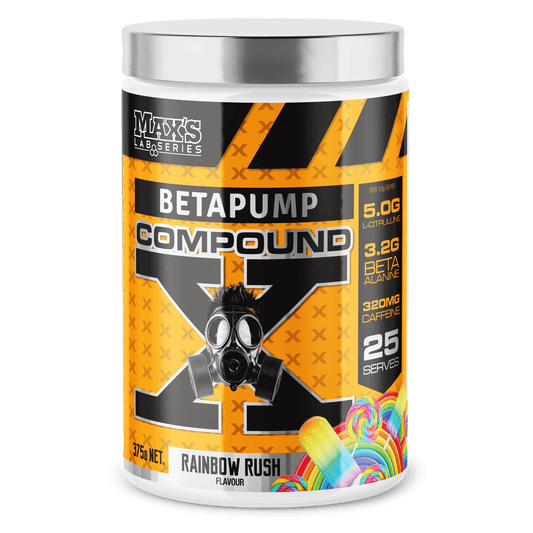


What's New
-
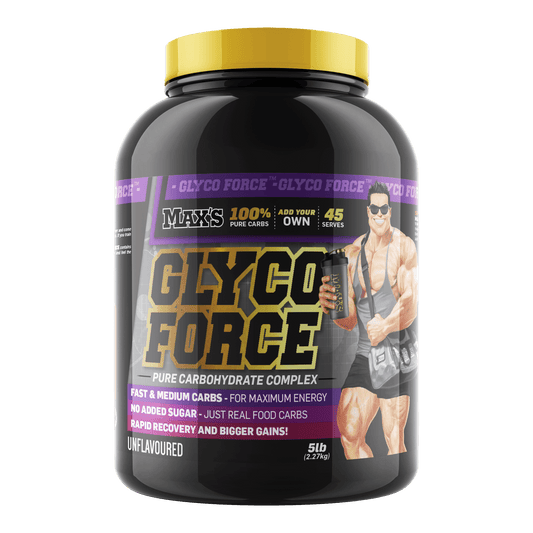 SaleRegular price $54.95 AUDRegular priceUnit price per
$62.95 AUDSale price $54.95 AUDSale -
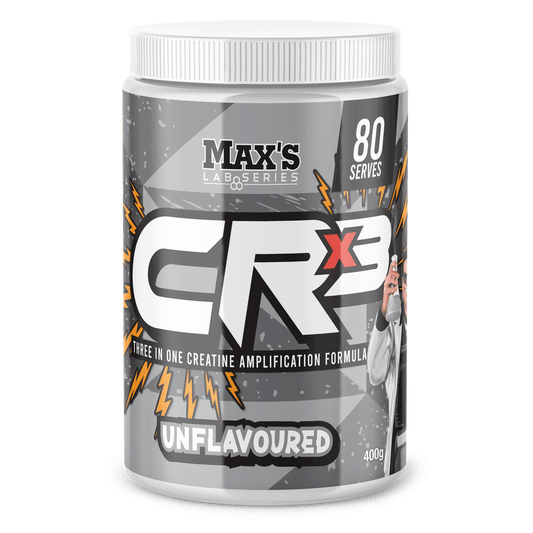 SaleRegular price $54.95 AUDRegular priceUnit price per
$59.95 AUDSale price $54.95 AUDSale -
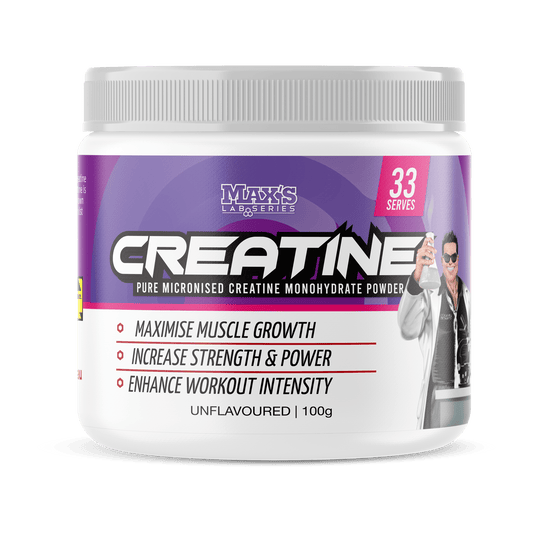 SaleRegular price From $14.95 AUDRegular priceUnit price per
$19.95 AUDSale price From $14.95 AUDSale -
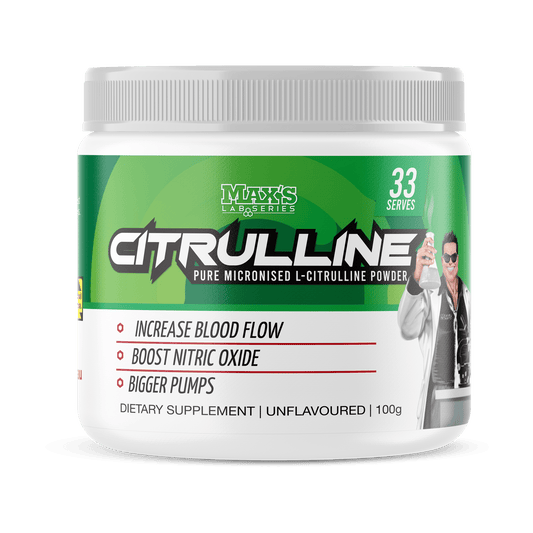 SaleRegular price $19.95 AUDRegular priceUnit price per
$22.95 AUDSale price $19.95 AUDSale


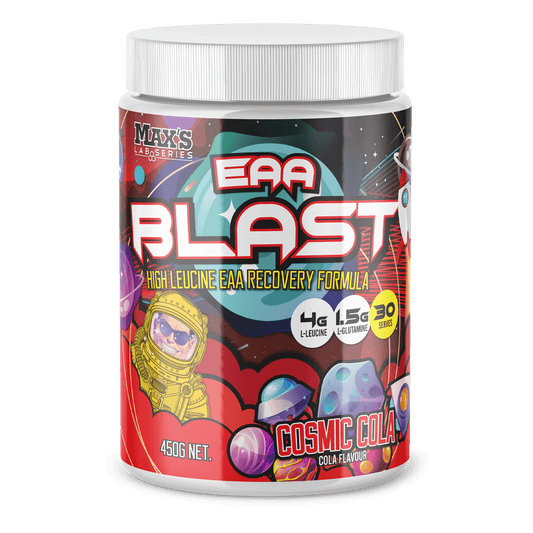


Browse the full range
-
100% AUSTRALIAN MADE PROTEIN POWDER Boosting your protein intake with protein powders...
-
Foods that are high in protein are a great way to build...
-
Nutritional supplements are the perfect way to keep your body fuelled and...



What's new & special offers
-
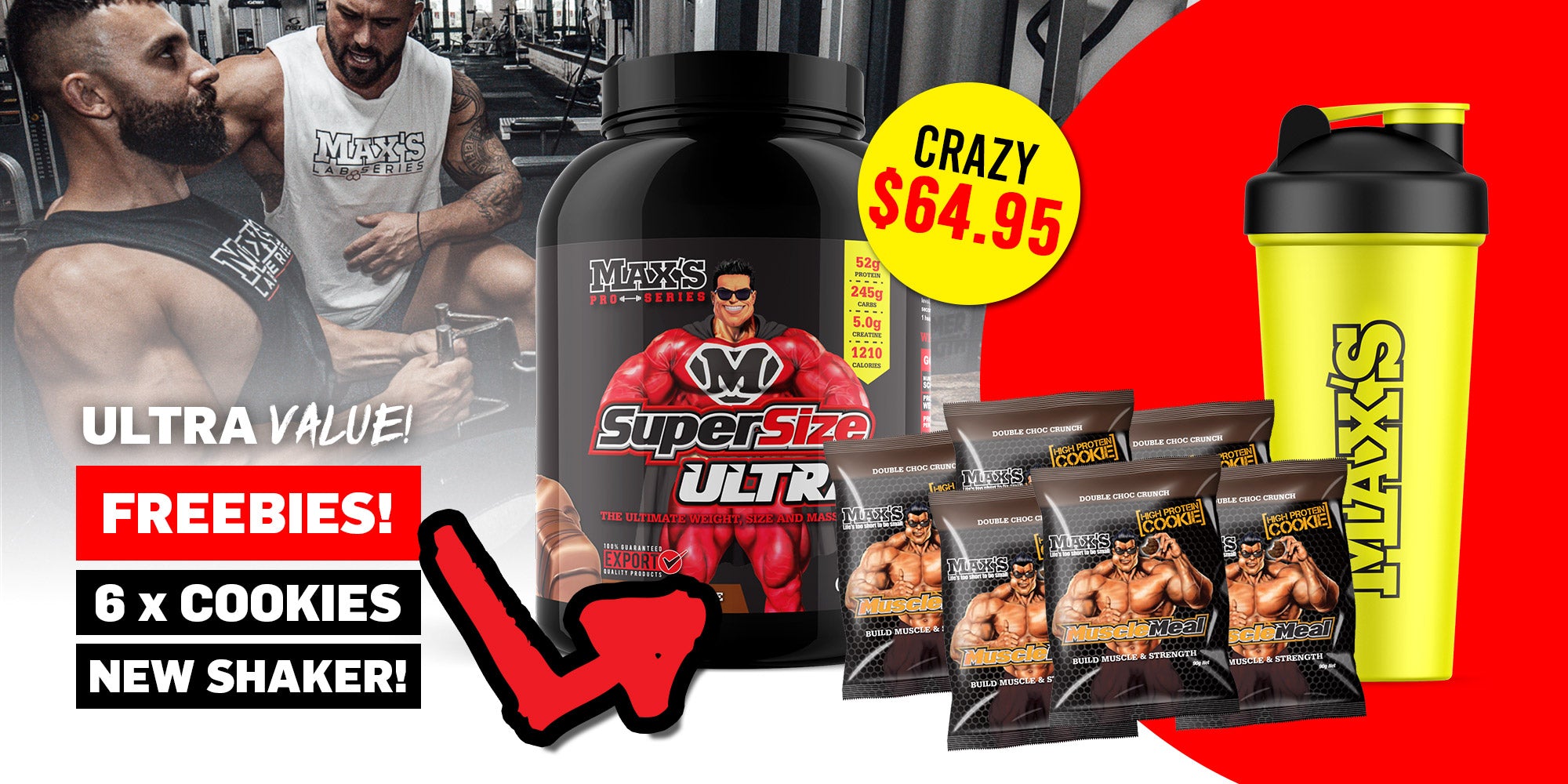
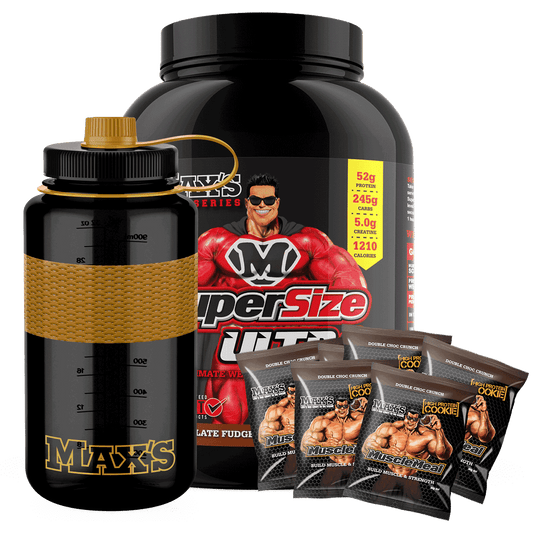
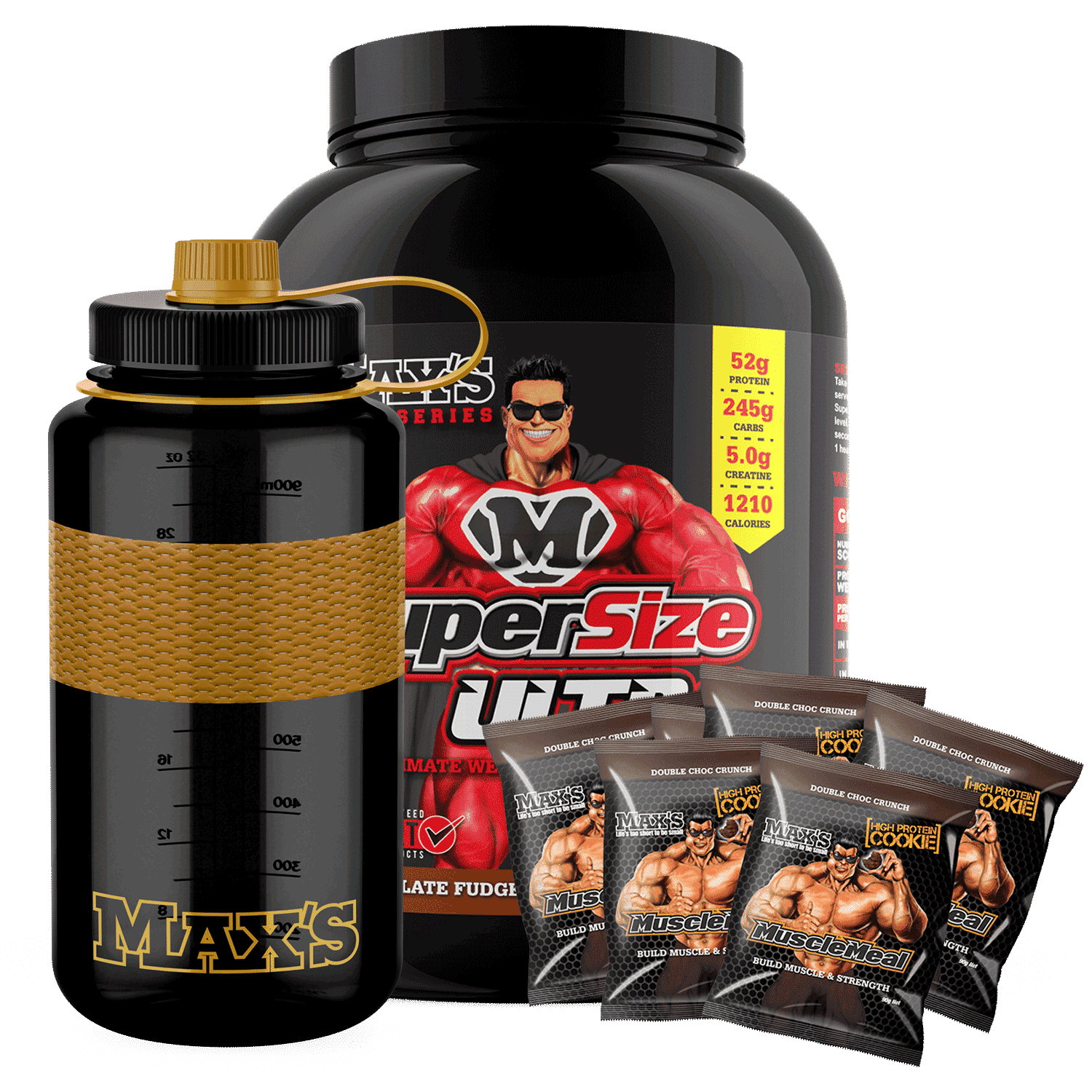
Free 6 x cookies & our new shaker
Get the dealGet massive value with MAX'S SuperSize Ultra Value Bundle loaded with premium freebies. This pack includes the ultimate mass building combination of MAX’S SuperSize Ultra plus free 6 x delicious Muscle Meal Cookies and a premium shaker!
-
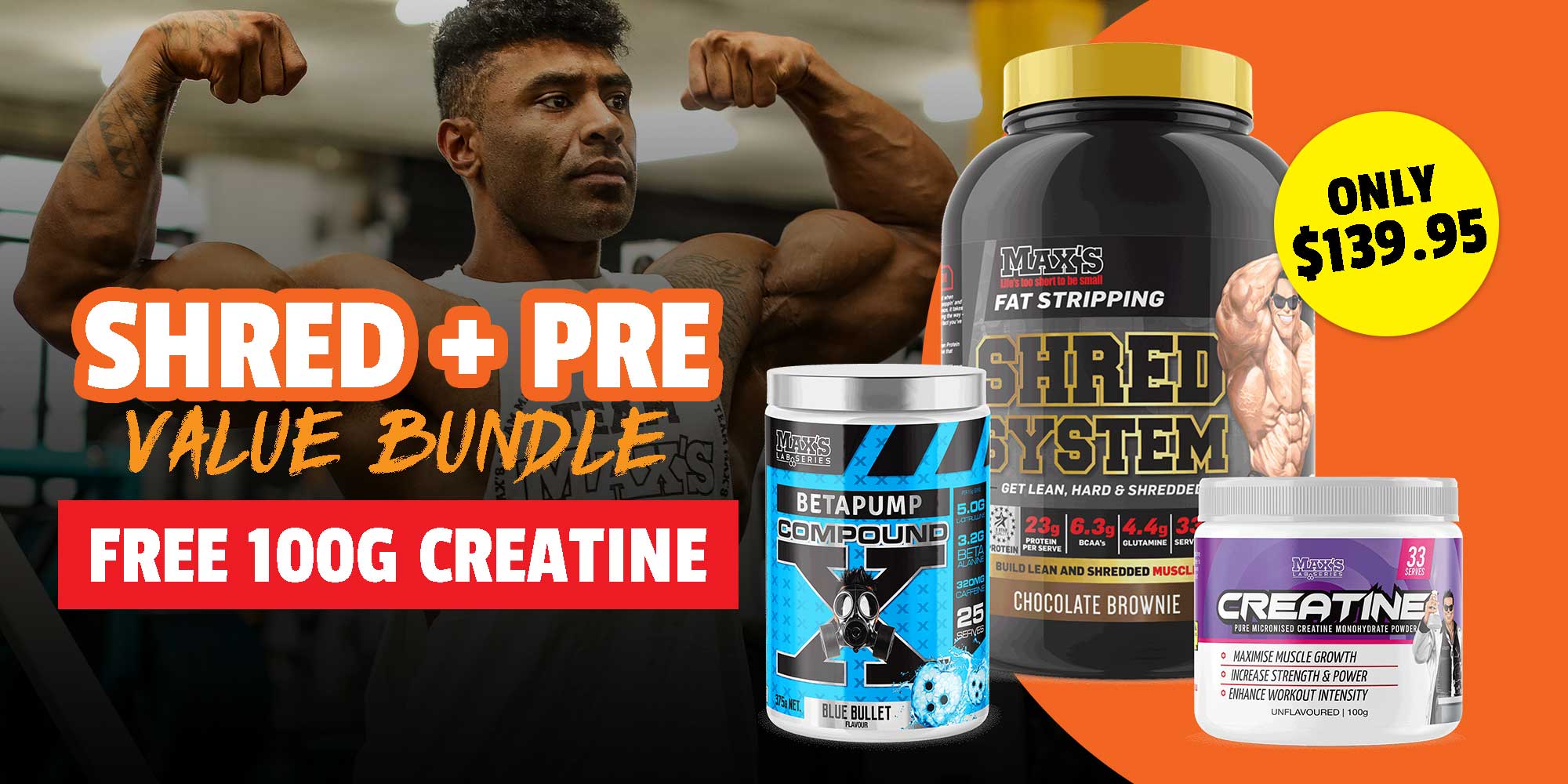
Free 100g Creatine With this SHRED value bundle
Shop nowScore a FREE 100g Creatine Monohydrate with Shred System 1kg and BETAPUMP Pre Workout
-
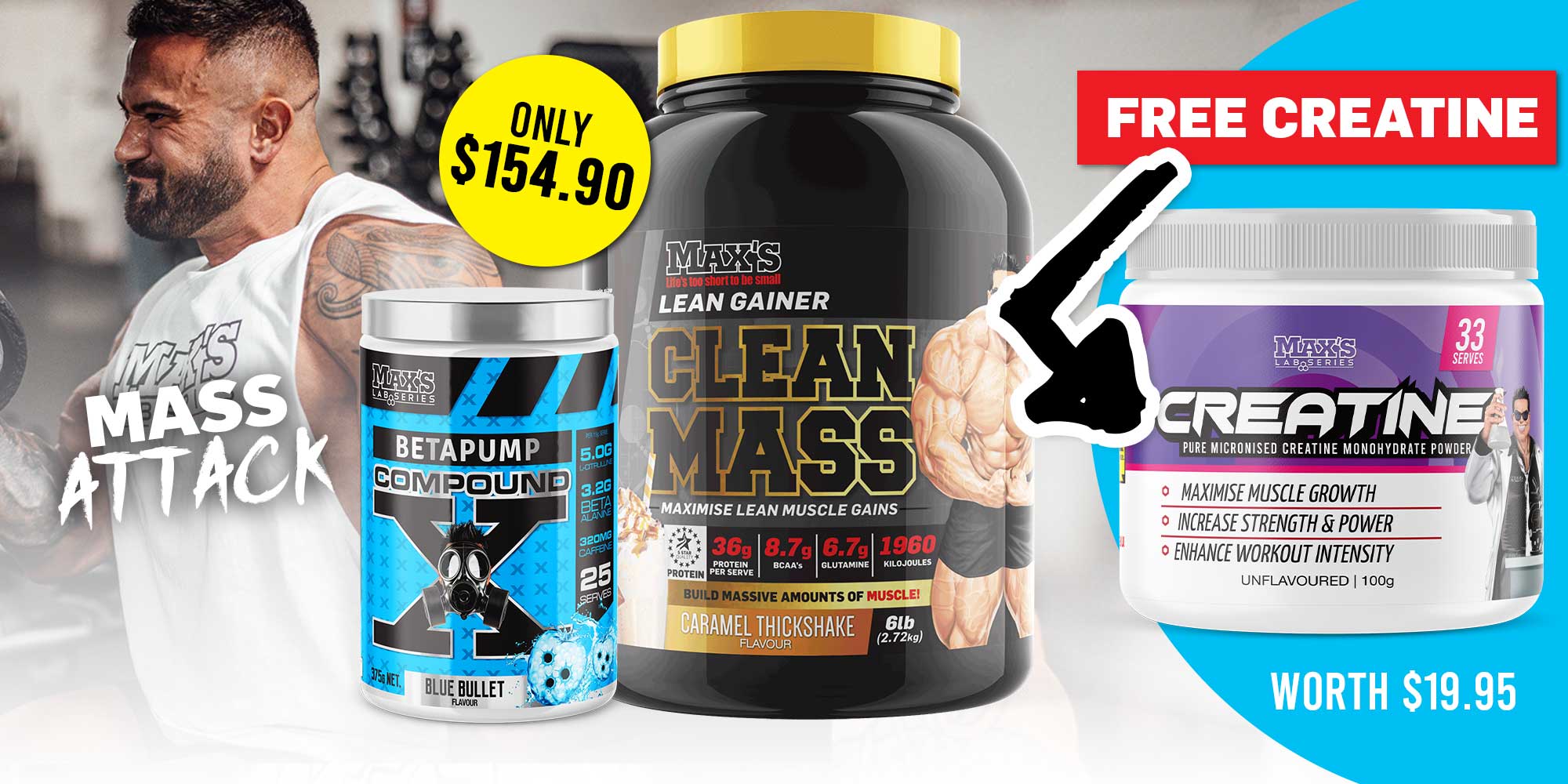
Free Creatine
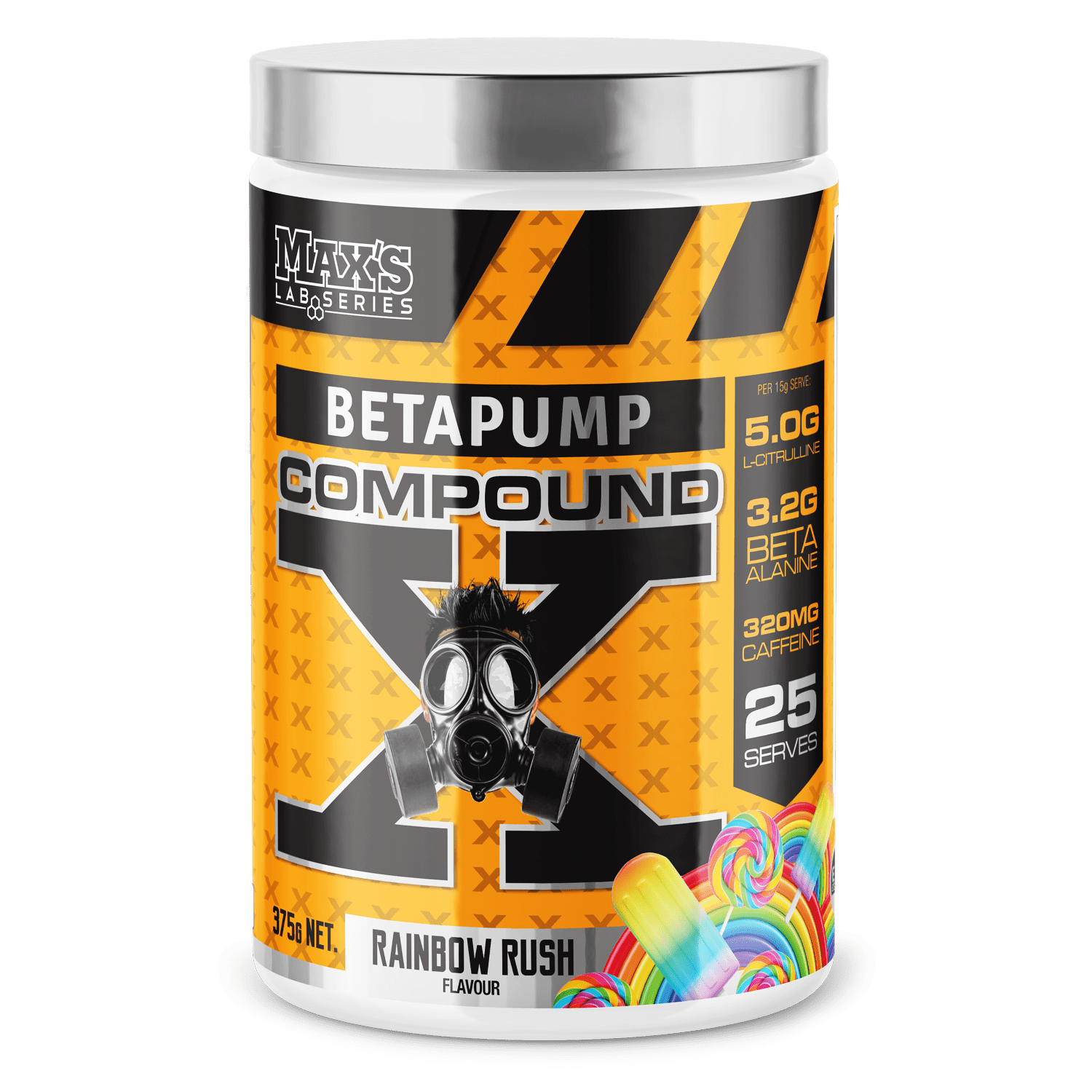
Shop nowGet a free 100g MAX'S Creatine worth $19.95 with our Clean Mass Premium Protein & BetaPump Compound X bundle.
-
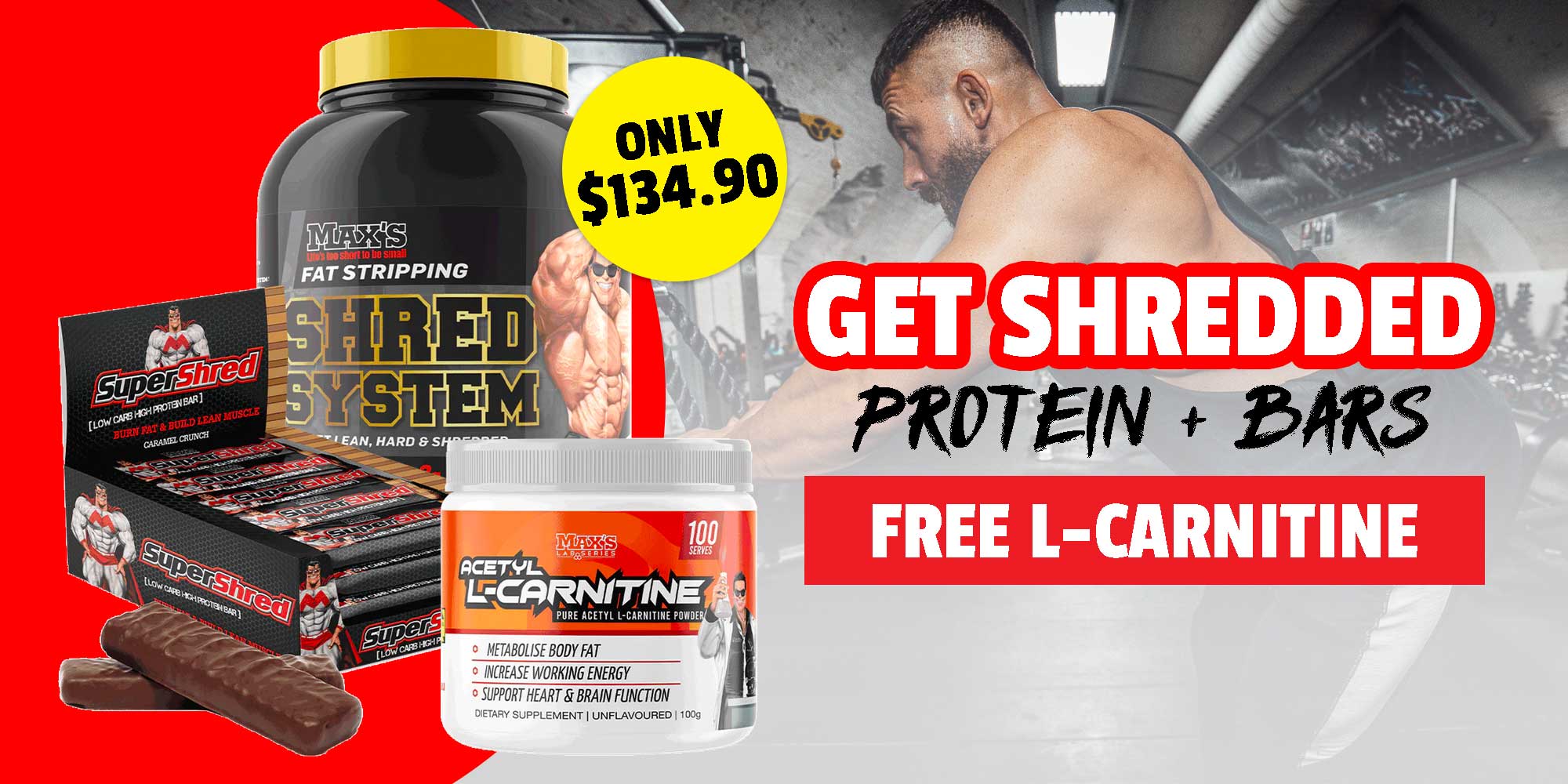
Free Acetyl L-Carnitine
Shop nowGet a free MAX'S Acetyl L-Carnitine worth $29.95 with our Shed System Premium Protein & SuperShred Bars bundle.
-
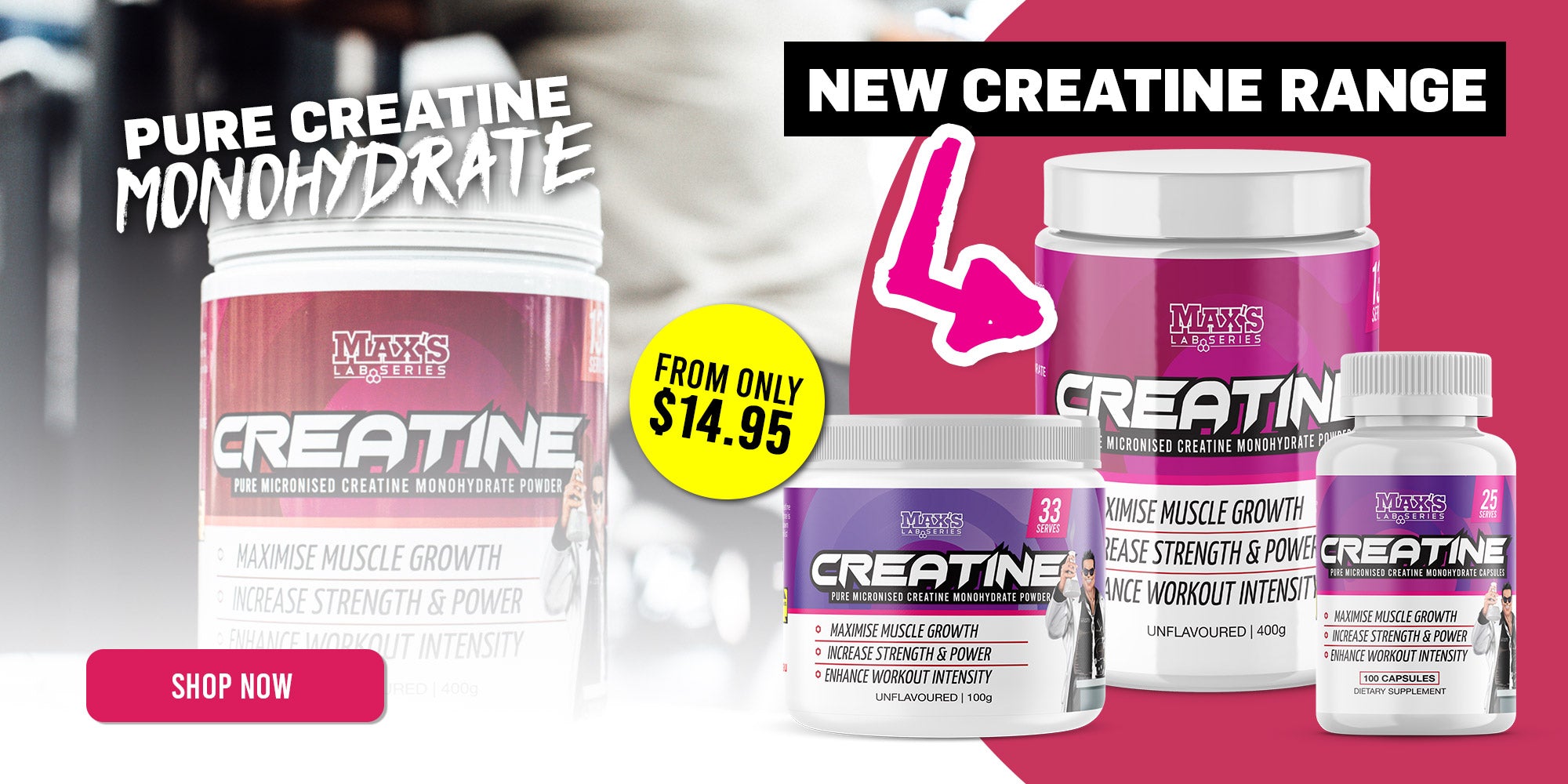
New Creatine Range
Browse the rangeShop our new pure creatine monohydrate range, starting from only $14.95!
-
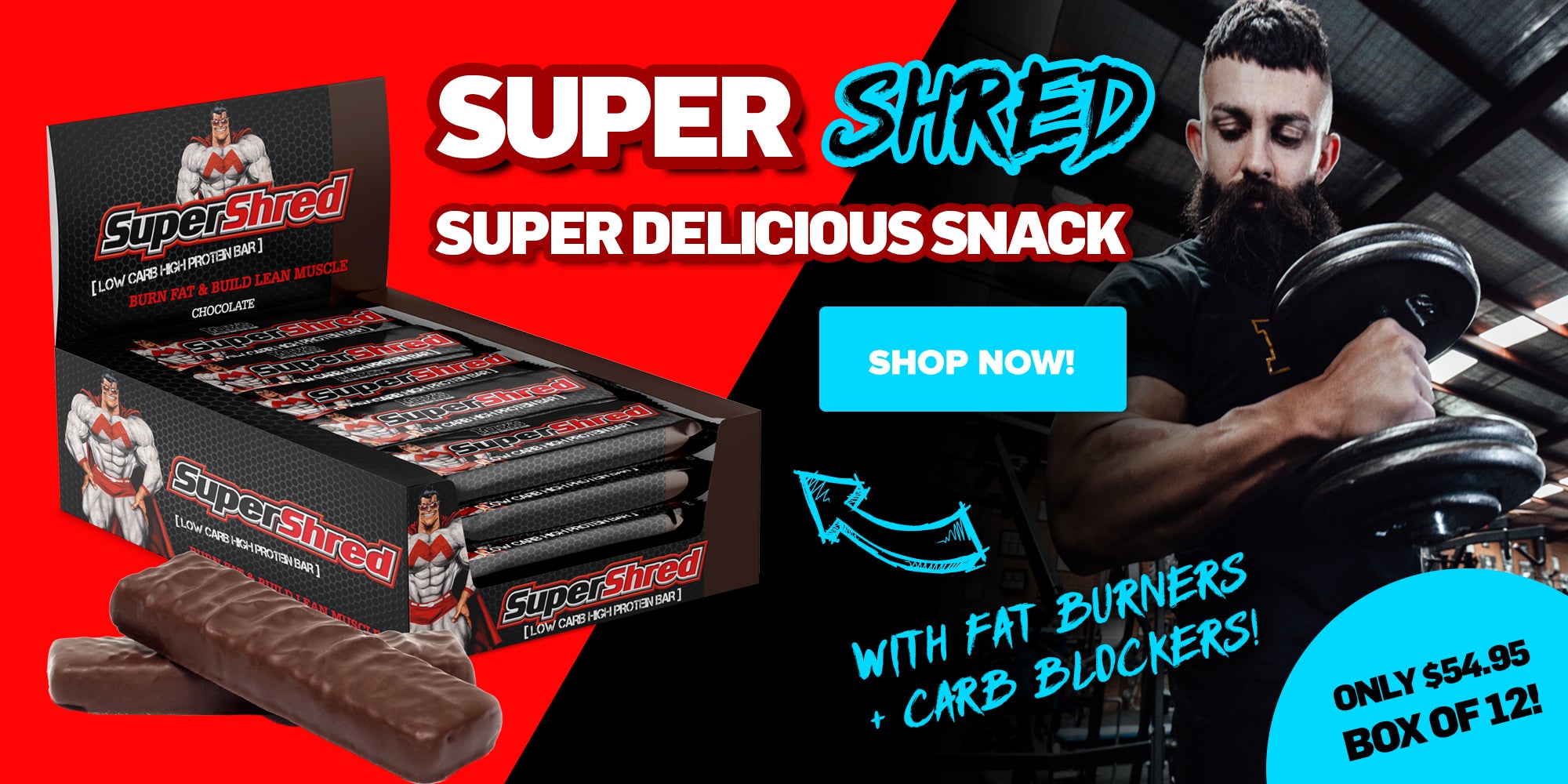
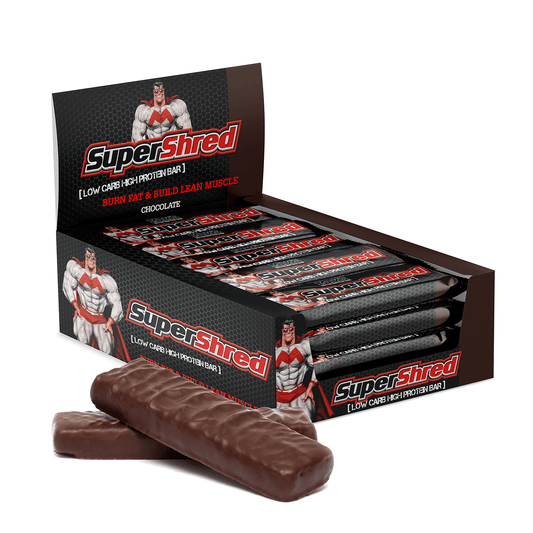
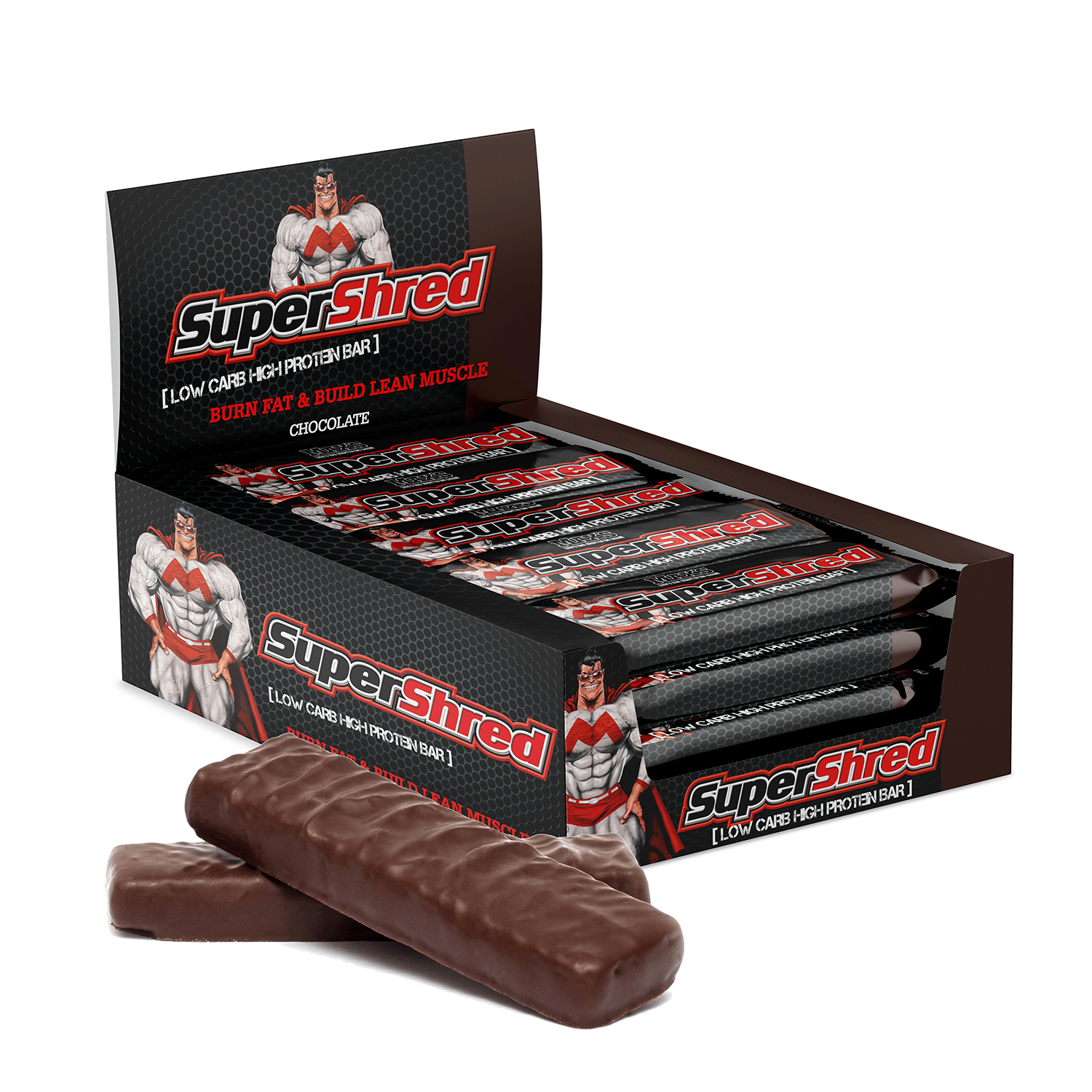
Box of 12 Super Shred Bars
Shop nowGet a box of 12 super delicious MAX’S Super Shred bars with fat burners and carb blockers for just $54.95.
-
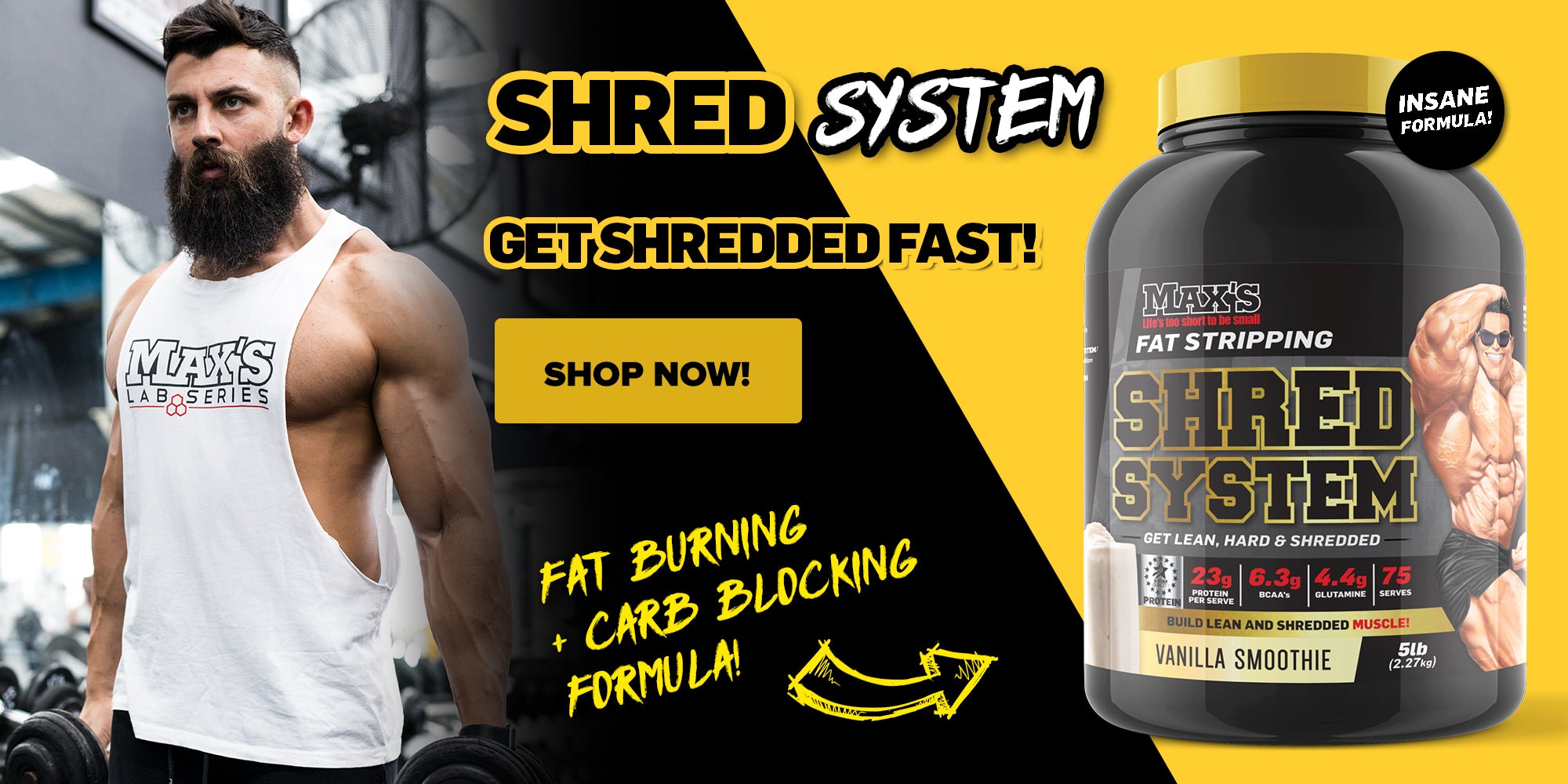
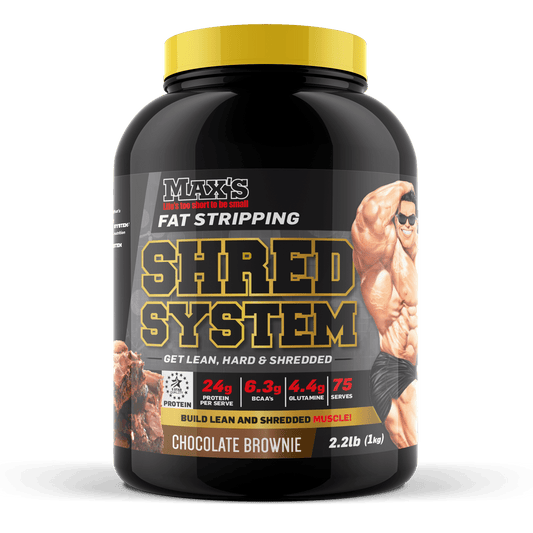
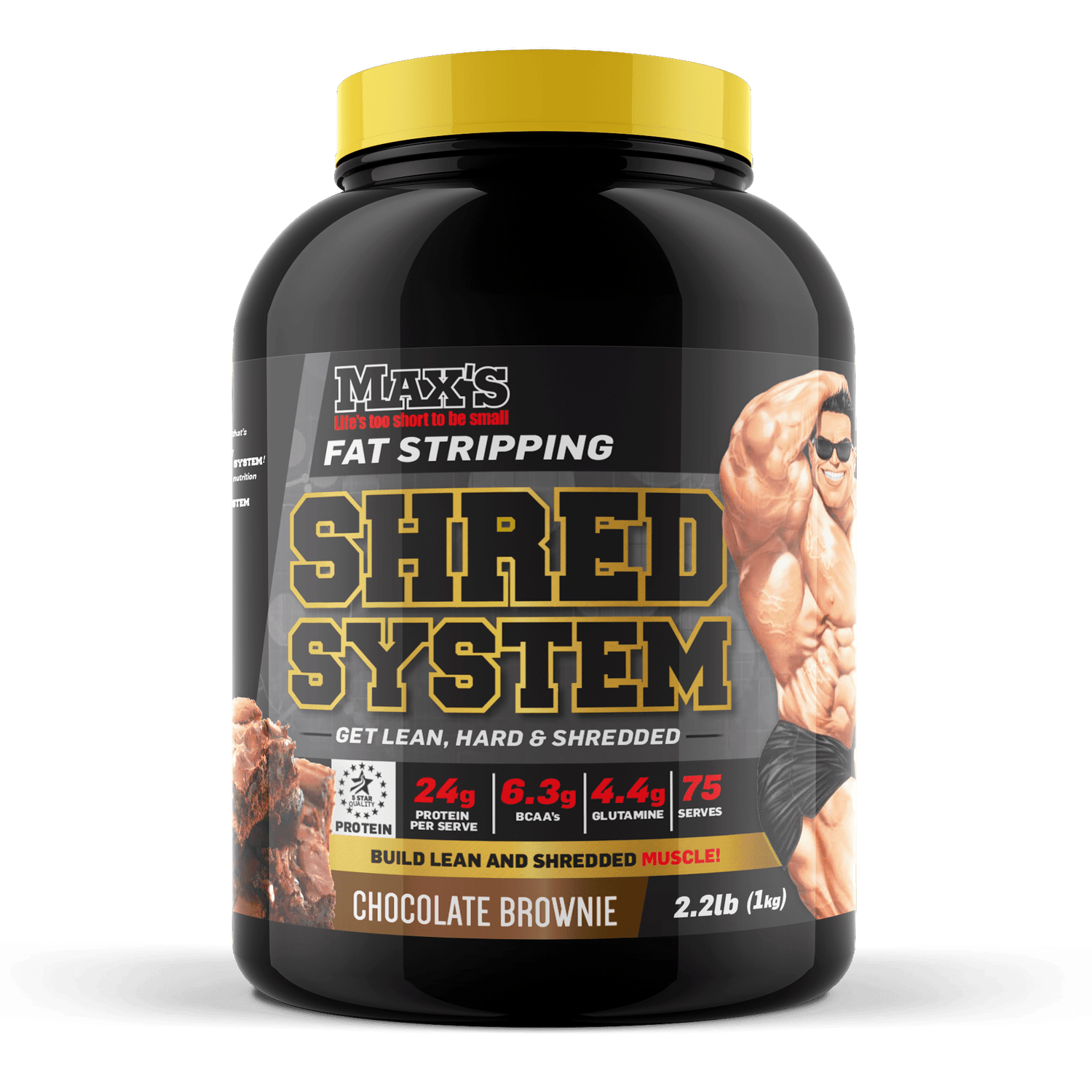
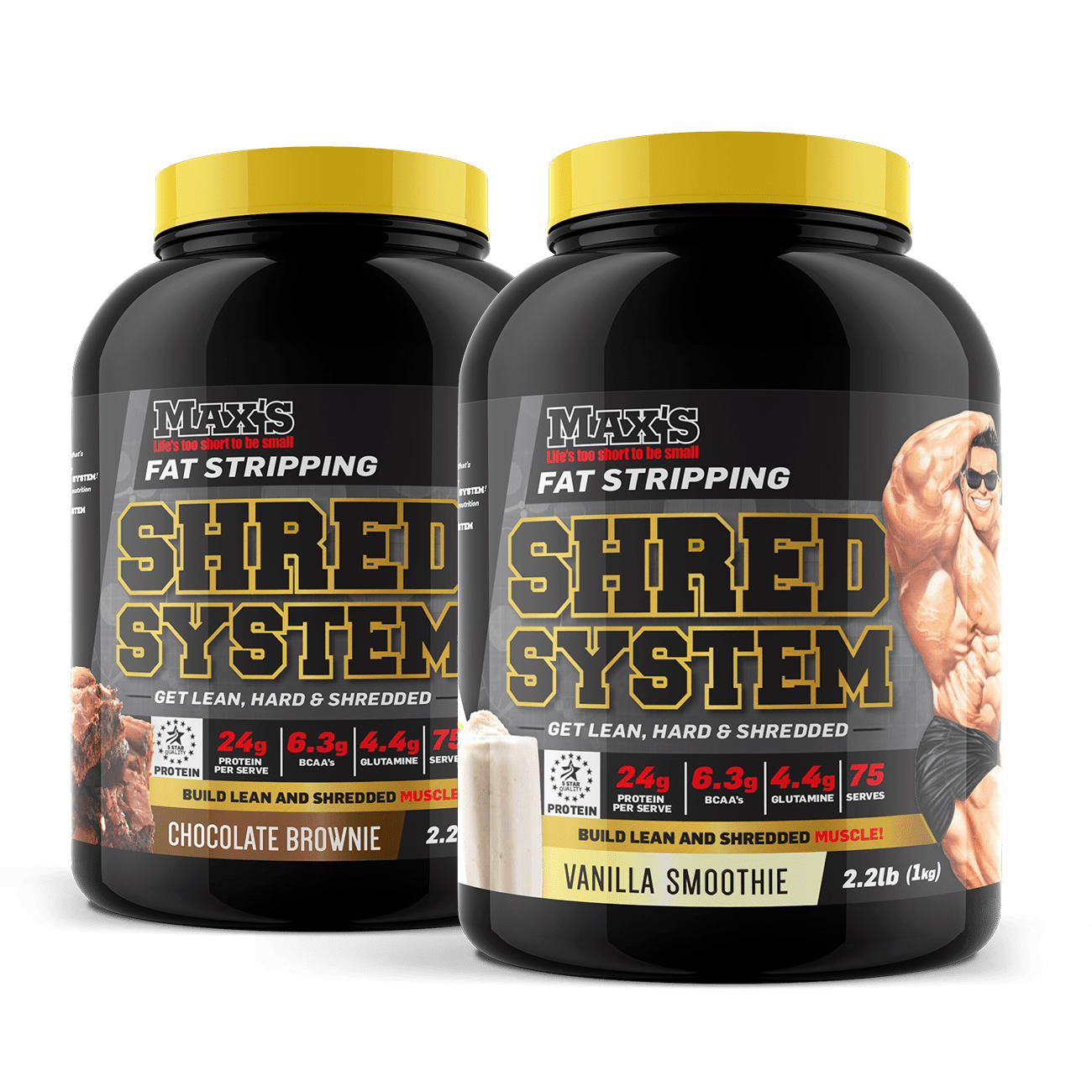
Shred System Premium Protein $79.95
Shop nowGet shredded fast with MAX's Shred System fat burning and carb blocking formula for just $79.95
-
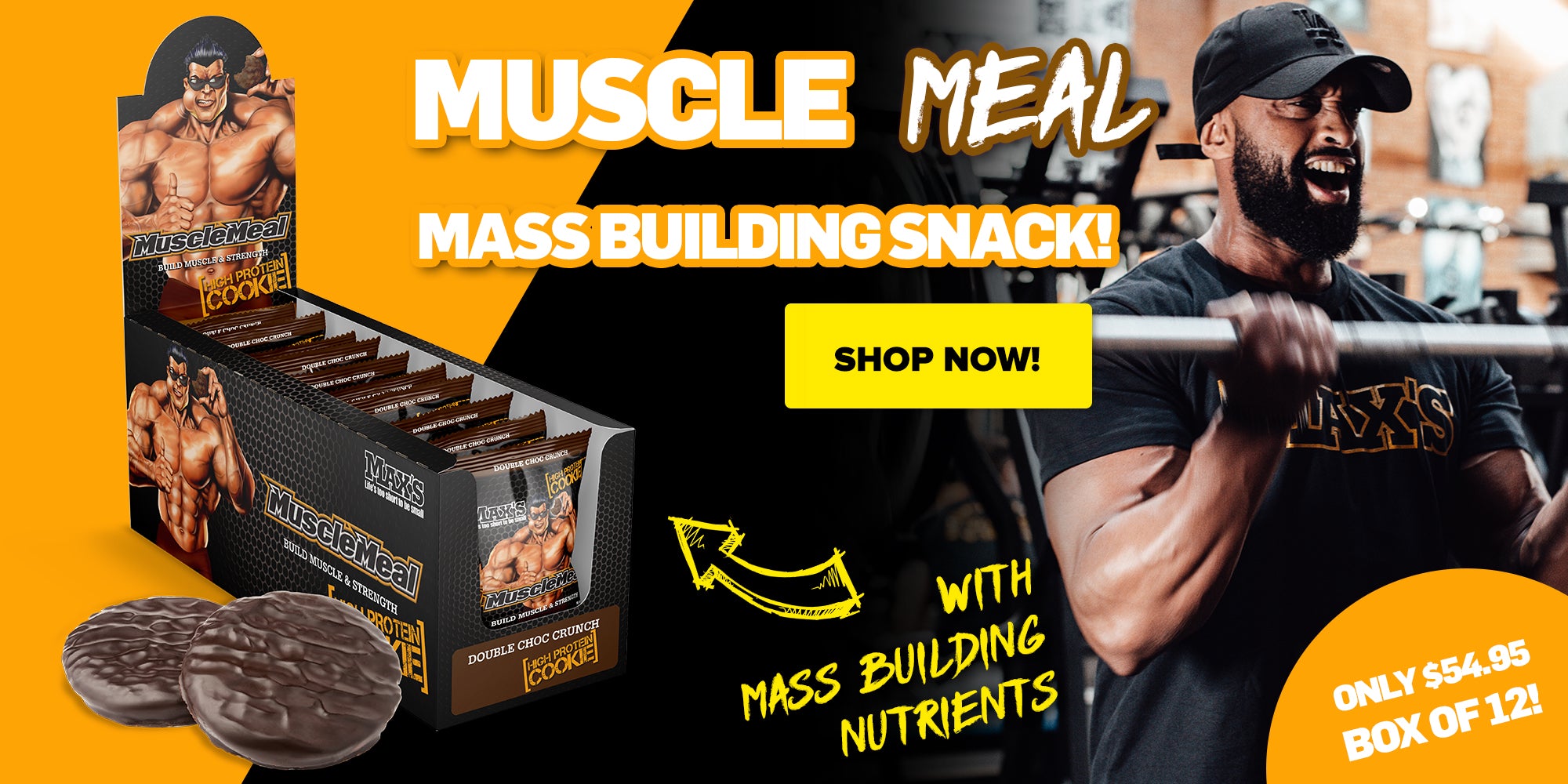
Box of 12 Muscle Meal Cookies
Shop nowGet a box of 12 MAX’S Muscle Meal Cookies with mass building nutrients for just $54.95.








Why choose MAX’S protein powders & supplements?
-

Subscribe for 10% off your first order
Sign up for exclusive content, deals, the latest updates on MAX’S and Muscle TV, and more.
-

Free shipping on all orders over $99
Stock up on Australian gym supplements from MAX’S to save on shipping.
-

Flat rate shipping Australia-wide
Doesn’t matter where you are — all our customers pay the same amount for shipping!



-
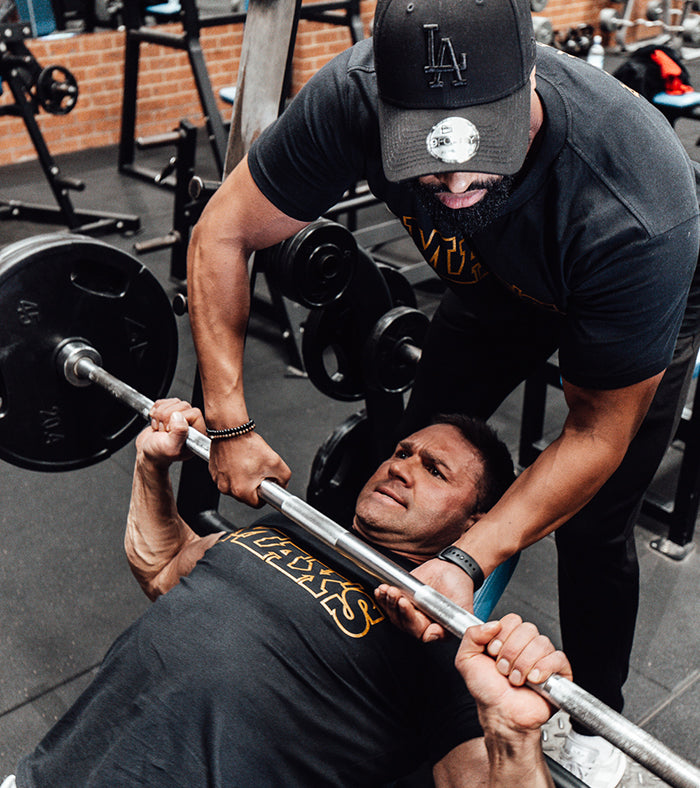
Training Guides
Learn more / DownloadWorking hard but not getting results? A constant cycle of intense workouts and legitimate recovery is the key to muscle gain, and we’ve got the guide to make the gains easier than ever to achieve. Based on the expertise of our Pro Athletes, we’ll show you how to pack on some serious muscle or lose that excess mass the right way.
Download our training guide to access:- A free training plan curated by Team MAX’S Pro Athletes.
- Gym and home workout ideas.
- The exercises that work — and why.
- Free shred and mass guides based on your fitness goals.
- And more.
-
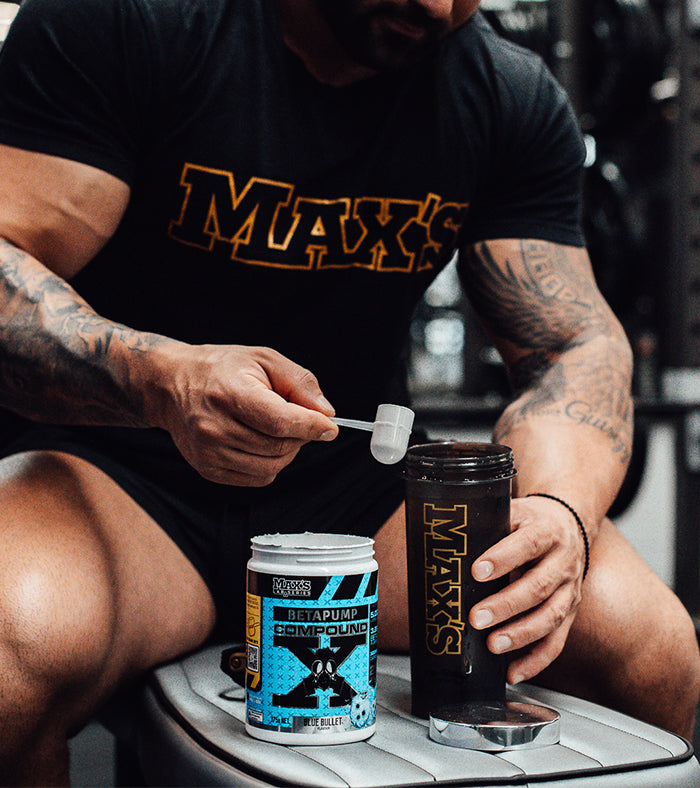
Nutrition Guides
Learn more / DownloadWhether you’re bulking or shredding, training from home or hitting the gym, we offer a complete nutrition guide with all the info you need to get the gains you’ve been working so hard for. From full meal plans to protein and supplement guides, we’ll show you how to gain clean mass, lose fat, and ultimately get jacked!
Download our free nutrition guide to access:- Tips and tricks from Team MAX’S Athletes on how they stay in incredible shape.
- A free nutrition plan explaining what to eat and how much to eat to reach your training goals.
- A supplement guide based on what our Pro Athletes take for success.
- And so much more.



